The Cardamom Tanzania Actually Grows — and Where
Published 26 September 2026 · Commodities.tz Editorial
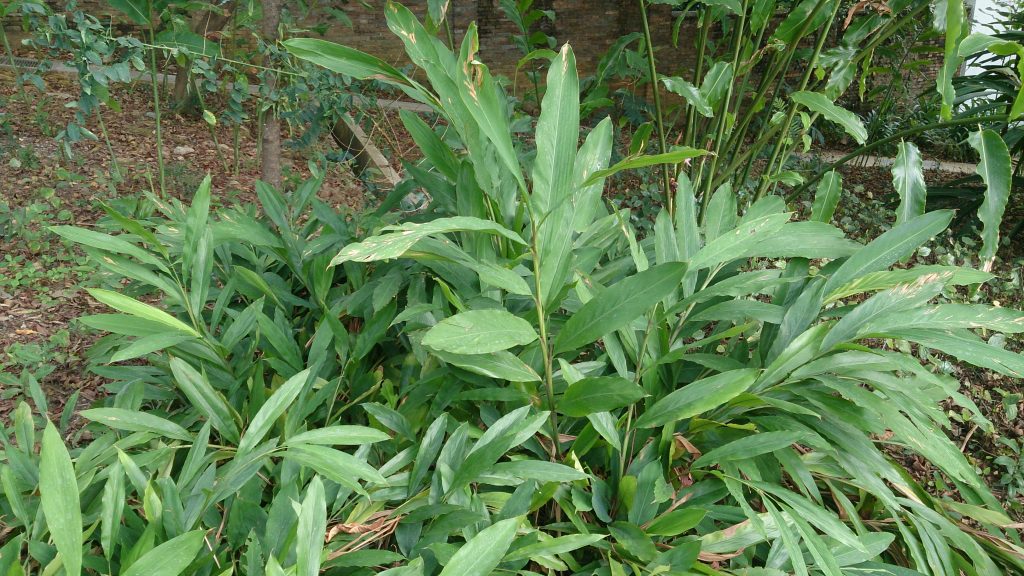
When cardamom is discussed as a global commodity, the reference point is almost always Elettaria cardamomum — “true” or green cardamom — grown at scale in southern India and Guatemala. Tanzania’s cardamom is the same species, but its story starts somewhere much more specific: a botanical garden in the East Usambara Mountains, planted by German colonial agronomists more than a century ago.
A German transplant, not an indigenous spice
Tanzania does have native ginger-family plants of the genus Aframomum growing wild, but according to horticultural research published by the International Society for Horticultural Science, these carry no commercial value. The cardamom that does have commercial value — Elettaria cardamomum var. minuscula, “the official cardamom of commerce” — was introduced deliberately. A small plot was established at the Amani Botanic Garden, in the southern Usambaras, probably by German colonists at the start of the twentieth century; the Amani Biological and Agricultural Research Institute, founded there in 1902, became the seed source for everything that followed.
From botanical garden to smallholding
The spread from Amani to surrounding farms was slow and deliberate. In 1954, the Amani garden distributed seedlings to local farmers, who propagated them vegetatively and passed plants on to others — a decade later, by the mid-1960s, a genuine local cardamom trade had taken hold, serving both export markets and Tanzania’s own culinary demand, particularly as an ingredient in curry mixtures. The growing region has stayed narrow and specific ever since: the East Usambara Mountains, part of the Eastern Arc chain, alongside black pepper and cinnamon as the area’s other characteristic spice crops.
Who grows it today, and how
Current cultivation is concentrated among the Washambaa people and highland immigrant farmers in the East Usambaras, according to trade-data platform Tridge, with roughly 60 percent of farmers in the area growing black pepper and/or cardamom as a cash crop, based on field research on regenerative agroforestry in Tanzania. The growing method is distinctive: cardamom is planted as an understory crop inside natural forest rather than on cleared plantation land, with farmers thinning the canopy and clearing competing undergrowth while leaving forest-floor leaf litter to act as natural fertilizer for the shade-loving plant. Because most smallholders cannot access or afford synthetic fertilizers or pesticides, the crop is, in practice, organic by default — though very little of it carries formal organic certification, meaning that advantage rarely translates into a price premium.
A crop with a built-in expiry date
The same agroforestry research flags an economic pattern that shapes the landscape as much as the market: cardamom farming in the East Usambaras tends to become unprofitable after roughly seven years, at which point farmers commonly switch to sun-loving crops like maize and bananas — a transition that requires clearing forest canopy the cardamom depended on in the first place. That cycle links Tanzania’s cardamom economics directly to a conservation concern in one of Africa’s most biodiverse mountain ranges, since the same shade cover that makes cardamom viable is also what gets cleared once cardamom stops paying.
Why this is worth knowing before sourcing
For a buyer or researcher encountering “Tanzania cardamom” for the first time, the practical takeaway is narrower than it sounds: this is not a national commodity grown across multiple regions the way cashew or coffee are. It is a single-species, single-region crop — Elettaria cardamomum, East Usambara Mountains only — grown by a specific ethnic and geographic farming community, using shade-agroforestry methods rather than plantation monoculture, with a farm-level economic ceiling that limits how much any one grower can expand production before the underlying forest system breaks down.
- International Society for Horticultural Science, "Cardamom in Tanzania" — https://ishs.org/ishs-article/21_24/ — 2026-09-26
- Grounded, "A Spicy Proposition: Regenerative Agroforestry in Tanzania's Spice Production" — https://grounded.co.za/a-spicy-proposition-regenerative-agroforestry-in-tanzania/ — 2026-09-26
- Tridge, "Tanzania Cardamom: Suppliers & Market Trends" — https://www.tridge.com/tridge-woods/cardamom/TZ — 2026-09-26